
Blog ·
Did GTA VI Boot on Windows in November’s Research Snapshot? No.
The first Xbox2Windows field report records the GPU Check release, three upstream project milestones and the evidence to watch next.
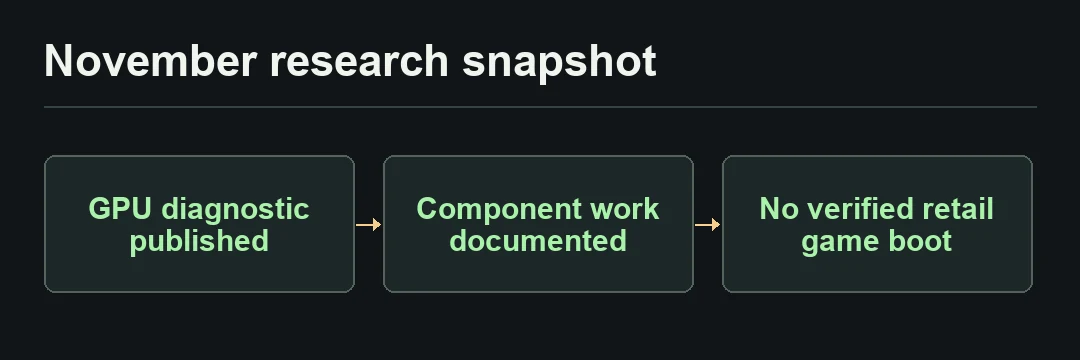
November’s first snapshot through the 23rd shows an official GPU Check release and more evidence for controlled Xbox Series components on Windows. There is no verified GTA VI boot from the projects covered here. Rockstar’s November 19 launch covers PS5 and Xbox Series X|S, and Windows has no confirmed release date in the reviewed publisher sources.
Release of the month: GPU Check v0.1.0
GitHub lists the Xbox2Windows GPU Check release on November 20, with a Windows x64 ZIP and a separate checksum listing. The release catalog uses the upstream asset’s binary name and size, SHA-256, source commit and release timestamp. The publication and commit timestamps answer different questions. If a mirror shows the same title but a different file, compare the original upstream metadata before trusting it.
The diagnostic is the usable public artifact highlighted in this snapshot. It collects evidence about particular GPU workloads and adapter details. The useful input to a hardware report is specific: give a release tag or revision, the selected device, its driver, the named test and the exact result. Separating a missing device feature from a failure allows maintainers to compare hardware without turning all skips into regressions. See the versioned release page for the artifact and integrity details.
An official new tag matters because it defines a replicable starting point. It is also the first thing to compare if a later report describes a new asset or altered behavior. Our changelog reads the checked-in GitHub snapshot and links visitors back to the upstream notes. The catalog continually tracks available artifacts, and this field note preserves the facts known on its review date.
Project milestones: what each result covers
Xbox2Windows. The project describes source-built programs running on Windows, with an experimental pipeline for translating CPU code and graphics inputs. The pinned experiment log contains a reviewed scan of 12,101 pixel shader records with 849 verified results and a separate two mesh-shader result. It also records 12 executed compute records out of 2,689 for that stage. The scope is important: each number uses a separate input category and test. These results are valuable for developers working on the corresponding component.
Leonida. The reviewed project README reports 26,503 shader translations to SPIR-V and records validation runs. It also describes caveats for some narrower subgroup configurations and states the title does not boot. The large workspace requirement the project recommends belongs to this pipeline and does not give an official PC install size. The milestone here is breadth of translated and validated shader programs with stated limitations. Integration with the retail title remains a separate capability.
XCL. The project describes native x64 execution with replacements for selected Xbox Series system interfaces and a route from Xbox shader code to DXIL. The README records individual runtime and Direct3D features and the evidence for them. That gives contributors a technical checklist and a way to tell which areas still need coverage. The report provides no public evidence for a complete playable GTA VI build. The comparison page links these approaches without collapsing them into a single progress percentage.
None of the counts can be added together to predict when a game will run. Some teams measure structural validation and others record matched output for particular cases. An upstream repository can publish much more code without issuing a new binary release. Conversely, a small new diagnostic release can define a more stable test path than a long list of recent commits. Review the type and revision of the result before assigning it a game-level meaning.
How this report is assembled
The current repository snapshot tracks public metadata, including named interaction totals, pushed timestamps, recent commit identifiers and release assets. The automatic job saves an updated snapshot when metadata changes. The project profile’s capability wording is reviewed separately from those fields. If a commit changes a README’s listed status, the editorial review checks the claim and adds a dated source reference.
That arrangement keeps maintenance work auditable. A new push may reflect documentation or a support fix and can move the repository’s timestamp without changing compatibility. A new status claim requires its own source and review. Notes about gameplay should specify the observable moment and the tested hardware. The status board presents both automated metadata and manual review dates so you can tell which facts changed.
For the next edition, this report’s reference point is the source evidence through November 23. The figures and release tag above give the baseline. A meaningful comparison can record what newly appeared, what upstream revised and what was only a new measurement of the same scoped behavior. A reader can then trace a difference back to a tag, commit or publisher announcement rather than inferring progress from the date of a new post.
Which updates are worth a separate report?
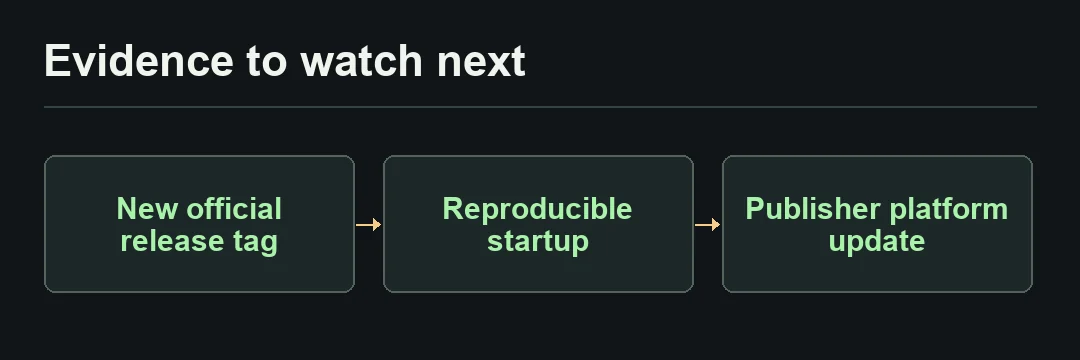
A new version can add an important diagnostic without changing retail-title startup. A regression can also affect only one adapter or fixture and still warrant a note. Include both the affected test and the prior working result so a reader can compare them. For the project summary, prefer an explicit maintainer change with a revision over an unsourced retelling in a social post. For public availability, a tag can be tracked independently of whether downloads are still present. Preserving the tag history makes it possible to show that a release existed and later had its assets withdrawn. That helps readers understand why an old bookmark may still resolve even when the download button has been removed.
What would change the next report?
An upstream build with a clear filename, documented purpose and a published SHA-256 can extend the catalog. A different category of milestone is a publicly documented retail-title startup with a named revision, repeatable setup and a clear end point. Look for separate confirmation before expanding the label from reaching a menu to sustained playability. These details can help developers reproduce the same work and let readers decide whether it changes their expectations.
For PC release timing, the decisive evidence remains a Rockstar announcement or publisher-backed store listing. A change in media estimates does not establish a platform or a date. A new cloud announcement could affect how an existing console copy is played while leaving the native Windows status unchanged. The PC release tracker records the source in the correct section.
Until a new verified milestone lands, the November snapshot supports two practical actions. Use the GPU Check release if you are testing the documented research workload, and check the official console or streaming sources if you want to play GTA VI today. The field notes feed lets you follow updates without following an unofficial download page.
Common questions
Which release could I actually verify on November 23?
The catalog had the official Windows x64 Xbox2Windows GPU Check tag. Use its version page and published hash for the exact asset. That release describes the adapter diagnostic tests.
Can repository activity replace gameplay evidence?
No. A changed timestamp or star count measures repository activity. Game-level claims need a named revision, supported setup and a demonstrated result.
Will this November report change whenever the release catalog updates?
The article states the baseline as of November 23. Check the catalog for current downloads and the project board for newer capabilities. Separating a dated report from current metadata makes it possible to compare references without silently changing the prior evidence.